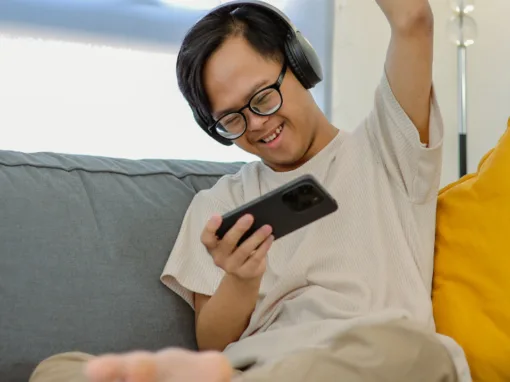
Transitioning from a residential facility or family home to independent living comes with lots of questions. What if you need help with something? What if someone forgets to take their medication? What if there’s an emergency?
Smart Living supports are designed to give participants the independence they want, with the backup support they need. Through a combination of smart technology and remote support, individuals can live confidently in their own space, knowing that help is always available.
Here’s how new and innovative technologies work in real life to support daily routines, keep participants safe, and help them stay connected.
Tech supports for health and safety monitoring
Health tracking and medication management
These are some examples of how smart devices can help to track and monitor health:
Smart medication dispensers can remind people when to take their medication and lock automatically to prevent accidental double-dosing. If someone misses a dose, both the participant and our team get an alert so a remote support professional can check in.
Wearables can track important information like heart rate, blood pressure, or blood sugar levels throughout the day. This makes it easier to spot changes early. Our remote support team can also monitor these readings and connect individuals with medical help if needed.
Smart sensors can track and log sleep patterns, and detect if someone gets up a lot at night, or doesn’t return to bed. This helps make sure participants are well-rested and alerts our team if something seems unusual.
Fall detection and emergency response
Smart Living apartments can include fall detection sensors throughout the home. If someone falls, our remote support team immediately receives an alert. We can then talk with the individual through the two-way video system to see if they’re ok, and contact family or emergency services if needed.
Participants can also use panic buttons around the home or wear a smart watch that can activate emergency help with a tap. If someone needs help and can’t reach the main video system, they can use these and other emergency devices to connect with our support team.
24/7 emergency monitoring
Smart sensors in the apartment monitor for emergencies like fire, carbon monoxide, flooding, or extreme temperatures. If any of these situations occur, our remote support team is notified immediately and can contact 911, family members, or other emergency contacts as needed.
Some assistive tech can fix issues by itself. For example, smart water leak sensors in bathrooms and kitchens can detect problems early and even shut off water automatically to prevent major damage.
Smart tech for home safety and security
Cooking safely and independently
The kitchen can be one of the most challenging areas for independent living, but Smart Living technology helps participants cook safely and confidently.
Infrared cooktops, smoke detectors, and sensors alert the person in the kitchen and our remote support team if appliances are left on too long. Smart plugs can also automatically shut down devices to prevent problems.
When cooking, individuals can use the video system to connect with a remote support professional to guide them through recipes, help them use appliances safely, or provide encouragement as they try new dishes.
Home security and access control
Smart doorbell cameras with facial recognition help participants see who’s at their door and can even identify familiar visitors versus strangers. That way, individuals can control who has access to their home, and our remote support team can also monitor for any security concerns.
Video cameras outside the building provide additional security and allow individuals to check the surroundings anytime through their tablet or smartphone.
Tech to help with daily routines and skill building
Visual schedules and reminders
Smart tablets throughout the apartment display visual activity schedules to help people stay organized and on track with their daily routines. These digital calendars can include pictures and voice reminders for everything from work schedules to medical appointments to fun activities.
The system can remind individuals about personal hygiene tasks, household chores, meal times, or any other routines that are important to them. Unlike paper schedules, these digital reminders can be easily updated and customized as needs change.
Remote coaching and skill development
Independence doesn’t happen overnight; it’s built through practice and support. Our remote support team can provide coaching through the video system to help participants develop new skills or work through challenges.
Whether someone is learning to do laundry, following a new recipe, managing their budget, or figuring out how to order groceries online, a remote support professional can guide them step-by-step until they feel confident doing it on their own.
Routine reminders and check-ins
We use assistive and enabling tech to help participants stay on track with their routines without needing another person to step in.
For example, someone might get a buzz on their smartwatch or a visual reminder on the built-in tablet when it’s time to take medication, get ready for work, or start meal prep. The tablets can also display personalized checklists or step-by-step instructions for things like cleaning the kitchen, doing laundry, or packing a lunch. This gives participants the tools to do things on their own and at their own pace.
Environmental control and comfort
Climate and lighting control
Participants can control their apartment’s temperature, lighting, and even ceiling fans by voice commands or with smart devices like tablets and smart watches. That means individuals can adjust their environment exactly how they like it without complicated controls.
Smart lighting systems can even guide someone through the apartment at night, automatically lighting a path to the bathroom or kitchen when they get up.
Our remote support team can also monitor the situation, and take action if temperatures become extreme or if there are other environmental concerns.
Tech that supports social connection and community activities
Staying connected with others
Smart Living includes access to our social app, which helps participants connect with each other, chat with remote support staff, and video call family and friends. The app is designed to be user-friendly while keeping individuals connected to the people who matter most.
Video calling stations (built-in tablets) that are simple to use make it easy to stay in touch with family, friends, or healthcare providers.
Community activities and events
The Smart Living tablets notify participants about virtual meetups, game watching parties, movie nights, and educational sessions happening in the community. It’s an easy way to sign up for activities and connect with others who share similar interests.
The system can also remind individuals about in-person community events, help plan how to get there, and even coordinate with friends to attend together.
GPS safety and navigation
GPS trackers or smartphone apps can provide peace of mind for anyone who sometimes needs help finding their way around. If someone gets lost, our remote support team can help guide them home or dispatch help if needed.
These systems can also help individuals learn new routes in their community and build confidence in getting around independently.
Getting the right tech supports for each individual
Every person’s needs are different, which is why we do a comprehensive technology assessment before someone moves into their Smart Living apartment or before we install the tech into your existing home. All apartments include a two-way audio and video communication system, and the other assistive/enabling technologies are chosen based on what would be most helpful for each person’s specific situation and personal goals.
During the assessment, we talk about:
- Goals for independent living
- Current skills and areas where additional support might be helpful
- Any safety concerns the individual or their family might have
- Any health conditions that might benefit from monitoring
- Comfort level with different types of tech
After this conversation, we create a personalized technology plan that becomes part of the individual’s PCP.
Experience Smart Living
Smart Living technology gives people the confidence to live the life they want, while knowing that help is always available when they need it. It’s all about giving individuals the right level of support — not more, and certainly not less.
→ Visit the Smart Living page here and learn more about how it works
→ Ready to experience it for yourself? Visit our demo apartment to try out the tech and ask any questions you may have.